
Design and Technology
Welcome back everyone. We look forward to seeing more of your fantastic inventions on this page!
Key Vocabulary, Concepts and Recommended Reading
Impact Statement Spring 2026
Design and Technology Impact Statement - Spring Term 2026
We continue to successfully implement Kapow into our Design and Technology teaching and the inclusion of other subjects on the Kapow scheme has helped to create more cross-curricular opportunities.
As we move forward into the final term and into the next academic year, staff will make greater use of the assessment tools on Kapow to make a more balanced judgement on the students’ work. The children will begin to assess their own outcomes through discussion as either a class, group or individually. At the current time, the children’s outcomes tend to be fairly similar and rely on the use of duplicated templates. However the use of floor books allows more time for open discussions in class about completed work where students are able to effectively analyse the effectiveness of it.
Cooking club has continued to be an inclusive and successful club with an ever growing number of students wanting to join. It has enabled students to not only learn how to independently prepare a dish but has also exposed them to trying a wider variety of foods.
The Spring term data for Key Stage 1 and Key Stage 2 shows:
|
Spring 2026 |
|
|
PRE |
3% |
|
WTS |
9.1% |
|
EXS |
81.8% |
|
GDS |
6.1% |
This shows that as a school we are above the 75% target for pupils working at Age Related Expectation or above.
|
Pupil Premium |
SEN |
|
|
PRE |
2.3% |
15.2% |
|
WTS |
14% |
21.2% |
|
EXS |
81.4% |
60.6% |
|
GDS |
2.3% |
3% |
Next Steps
-Continue to monitor the roll out of the adapted curriculum (Kapow Combined)
-Begin to develop a list of resources for each unit including equipment and consumables. These should then be ordered and an inventory created so these can be maintained.
Impact Statement Autumn 2025
This term, we've implemented Kapow's integrated Art and Design Technology Curriculum in teaching Design and Technology. As the subject leader, I collaborated with teachers to tailor units, ordered necessary resources in advance, and received positive feedback on how this enabled teachers to feel prepared for the unit ahead. Next term, I plan to continue this approach.
This term we have changed how we evidence our Design and Technology work and have moved on to whole class floor books. Year 4 to Year 6 students have been involved in assembling the floor books for each lesson, filling in their own reflections and adding in photos and example pieces of work. Students have enjoyed sharing their work in this way and it has reduced workload so far for teachers.
Cooking Club has also been introduced this term. Students have been able to further develop their cookery skills through knife practice, designing their food and following recipes. DIY club has also continued this term and has remained a popular club where students are encouraged to learn practical, vocational skills.
|
|
PRE |
WTS |
EXS |
GDS |
|
KS1 and KS2 |
3% |
15.4% |
78.1% |
3.6% |
|
SEND |
15.2% |
39.4% |
45.5% |
0% |
|
PPG |
2.3% |
20.5% |
75% |
2.3% |
|
SEND and PPG |
12.5% |
37.5% |
50% |
0% |
Next Steps
-Monitor the implementation of Floor Books
-Continue Cooking Club
-Pupil Voice for Floor Books
Impact Statement Summer 2025
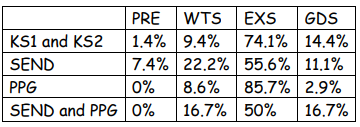
This term, we progressed our use of the Combined Art and Design Technology Curriculum by Kapow, with a stronger focus on the iterative design process. Pupil voice shows students can now confidently discuss this in relation to their work.
In Year 4, a floor book system has been trialled in preparation for a whole school rollout in the Autumn Term. This new book has been successful in creating pride in the students’ builds across the class with some students voluntarily showing the book to visitors in the classroom to share what they had made. The floor book also lists key vocabulary for each lesson to make it easier for students to describe their learning using the correct vocabulary. It has also made it easier to see students’ reflections on their work as teachers have more time to note down observations and discussions had by students about their learning. This new floor book should help to improve teachers’ wellbeing in the coming year as it reduces time needed to be spent sticking photos in every child’s book.
Following Public Health England guidance, food education continues to be a priority. Focused units will run in most year groups, with Year Five participating in the Young Chef of the Year Pathway Curriculum. Next term, a cooking club will also be introduced for KS2 to help promote the subject even further. We will also be introducing an inventor of the week to improve students’ awareness of future design and technology related vocations.
Next Steps:
-Implement Floor Books across the whole school
-Inventor of the Week to be introduced.
Impact Statement Spring 2025
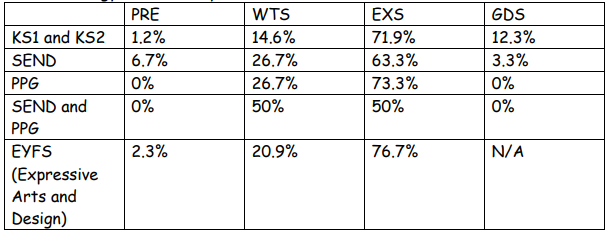
As we move forward into the final term and into the next academic year, the children will begin to assess their own outcomes by creating a product specification as either a class, group or individual. This will be implemented using the Kapow Scheme product planning templates. Students should also be beginning to reflect on their final pieces within their Design and Technology books, analysing the effectiveness of their design and how it could be improved.
During the Spring Term, students continued to explore mechanisms, textiles, structures, electrical systems, cooking and the digital world. We have continued to encourage extra cooking topics in class, some of them outside of the Kapow scheme. These have been very popular with students across KS1 and KS2.
A Design and Technology floor book is currently being trialled in Year 4. This is being created in the aims of reducing teacher’s workload as well as to encourage a more scrapbook style of work. So far it has included lesson by lesson vocabulary lists, knowledge organisers, pupil voice during the build process and pictures of the children creating their work.
Much in the same way we identify science careers for our pupils during Science sessions and Artist of the Week during assemblies, we will begin to distribute an inventor of the week in the summer term which classes will share and discuss. This should hopefully give children a wider understanding of the uses for Design and Technology in their daily lives.
Next Steps:
-Share Floor Book with teachers and discuss possibility of replacement of individual DT books
-Develop the way Design and Technology progression is recorded and assessed
-Develop consistent use of key vocabulary
-Provide opportunities for CPD for teachers/teaching staff including Food Safety as required.
Impact Statement Autumn 2024
This term, we've continued to implement Kapow's integrated Art and Design Technology Curriculum when teaching Design and Technology. As the subject leader, I collaborated with teachers to tailor units, ordered necessary resources in advance, and received positive feedback on how this enabled teachers to feel prepared for the unit ahead. Next term, I plan to continue this approach.
Our knowledge and skills progression document, aligned with the National Curriculum, now serves as an assessment grid for tracking and informing summative judgments. This is being completed by teachers but will need to be adapted as new units and changes to existing units emerge. Feedback from teachers suggests this is helpful for future planning but don’t currently support teachers to make end of term summative judgements as children maybe more skilled in one area than they are in another. E.g a child’s ability to use CAD software may be different from their ability to build a product. More discussion around the design, make and evaluate phases and the new units which have a specific focus rather than all three should support with this moving forward.
As before, pupil feedback at term-end reveals an increased enthusiasm for utilising tier-three vocabulary in discussing their work and outcomes. Sharing across year groups in pupil voice meetings has also been positive with pupils remembering previous learning from an earlier year group or keen to ask questions about what is coming up as they progress though the school. It has been really interesting to hear pupils evaluating their work too during these meetings. Books show a clearer use of design specification and pupils are starting to use this when talking about their work.
Year 1, 3 and 5 have now completed the units for food and nutrition. Other year groups will now take on their individual food making products. Evidence of food and nutrition opportunities are evident within EYFS.
The Spring term data for Key Stage 1 and Key Stage 2 shows:

This shows that as a school we are above the 75% target for pupils working at Age Related Expectation or above.


Next Steps:
-Continue to monitor the role out of the adapted curriculum (Kapow Combined)
-Explore and adapt the assessment resources in line with the D&T updates from Kapow
-Continue to develop a list of resources for each unit including equipment and consumables. These should then be ordered and an inventory created so these can be maintained (Through discussion with teachers prior to each unit)
-Develop specific risk assessments for each unit/equipment used alongside the Health and Safety Representative (check existing assessments)
-Develop curriculum to include EYFS and consider how this progresses into the Year 1 curriculum
-Review previous units and discuss next steps
-Develop consistency in books
-provide opportunities for CPD for teachers/teaching staff including Food Safety as required.